
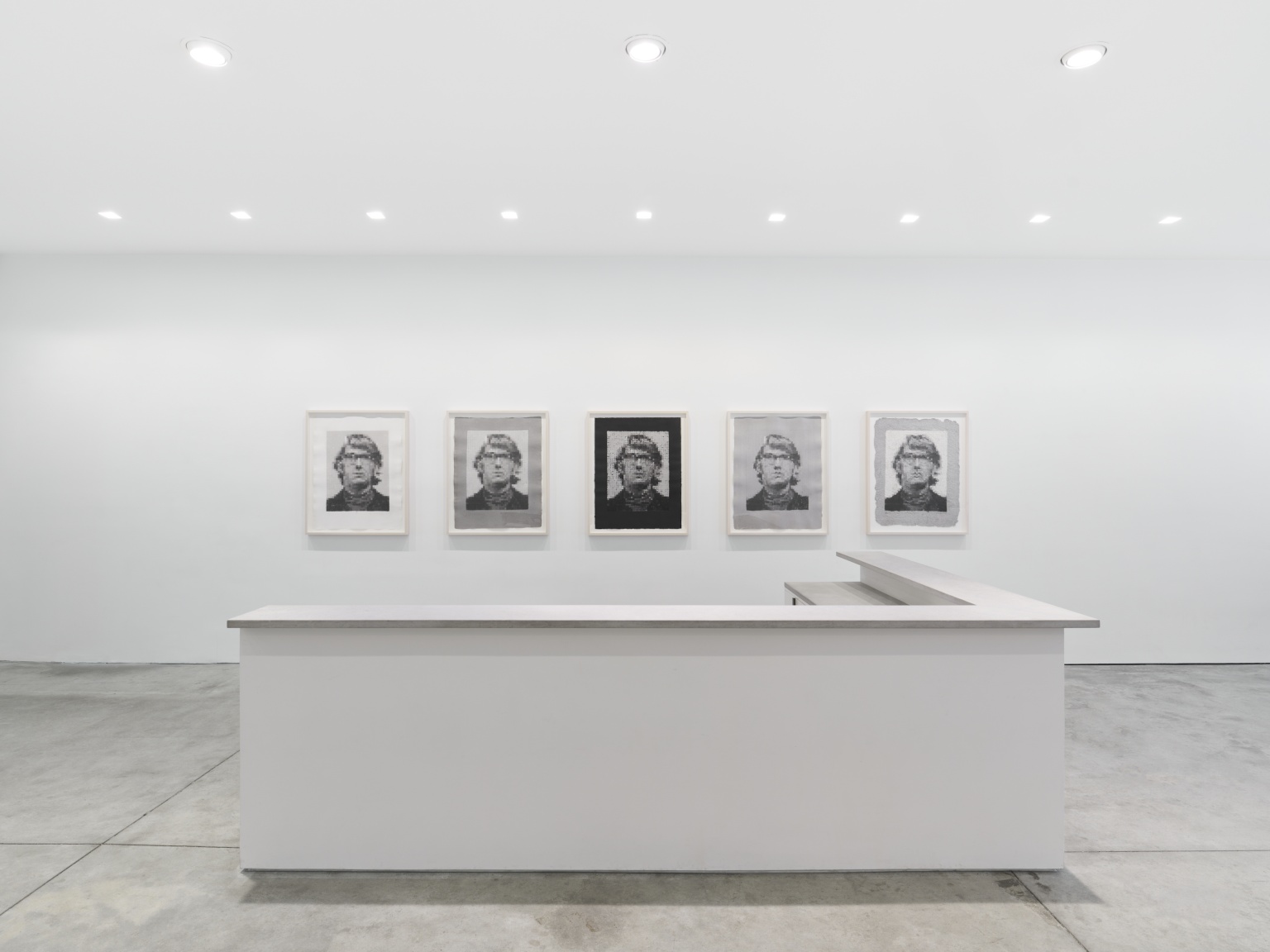
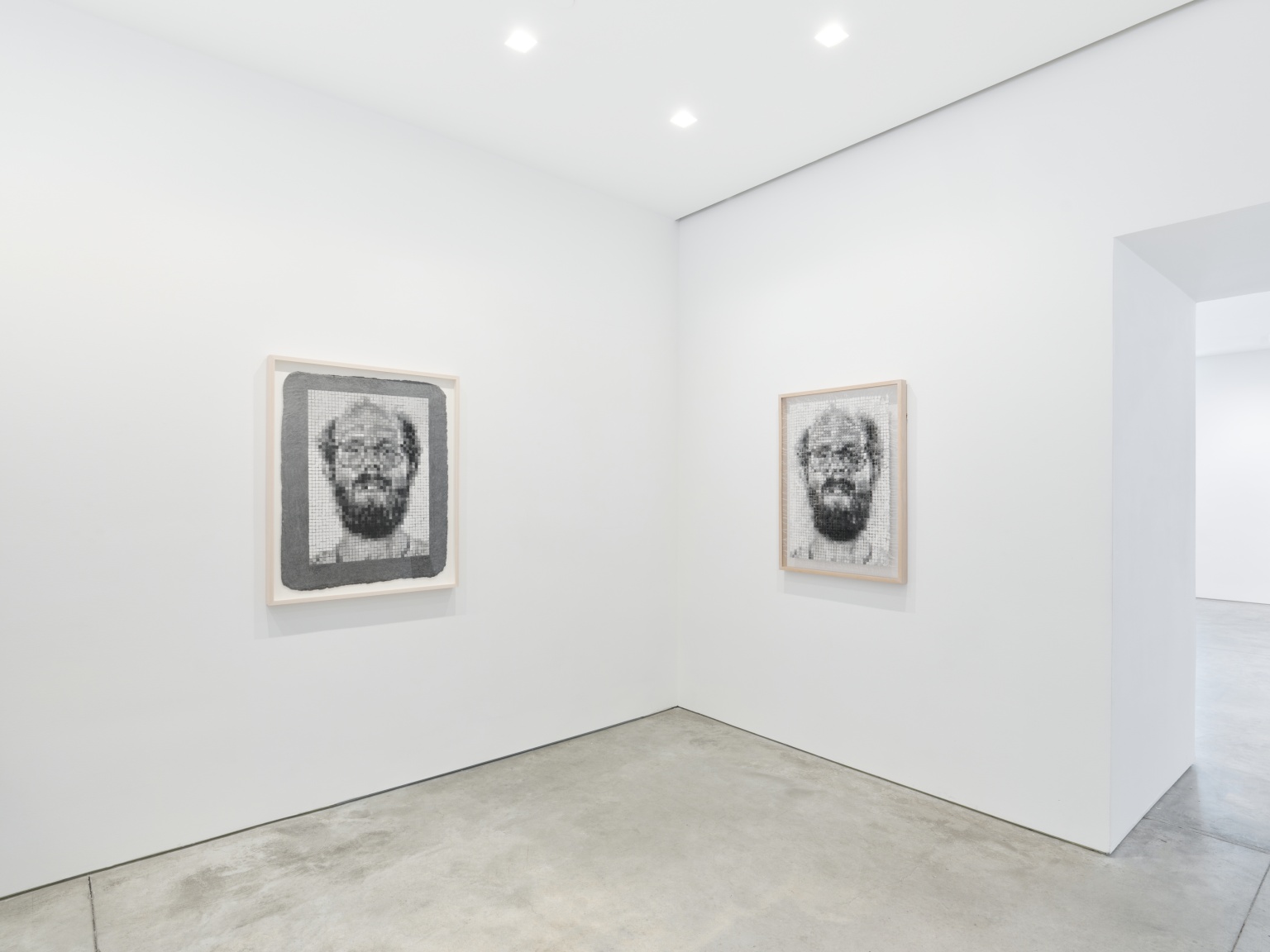
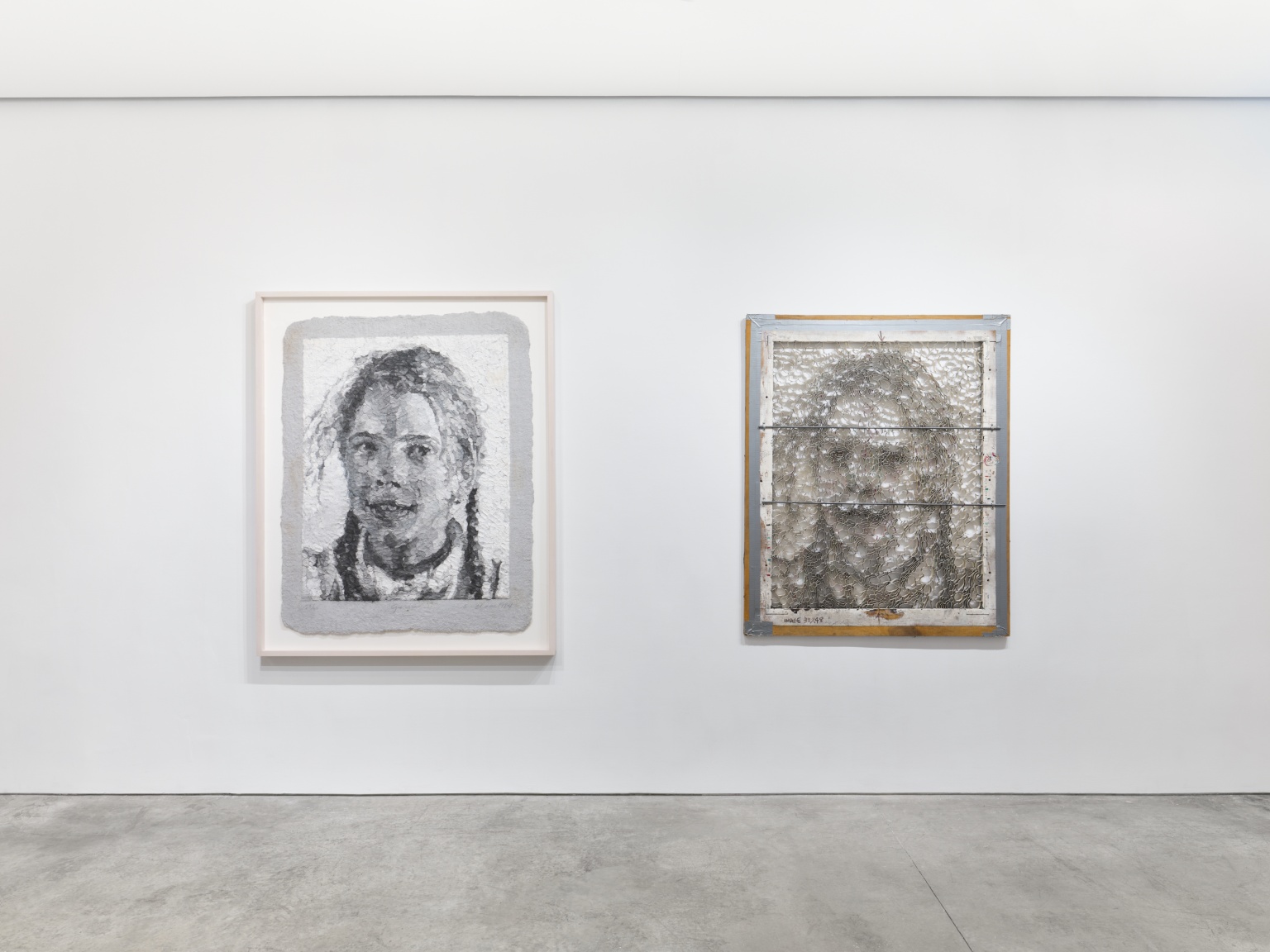
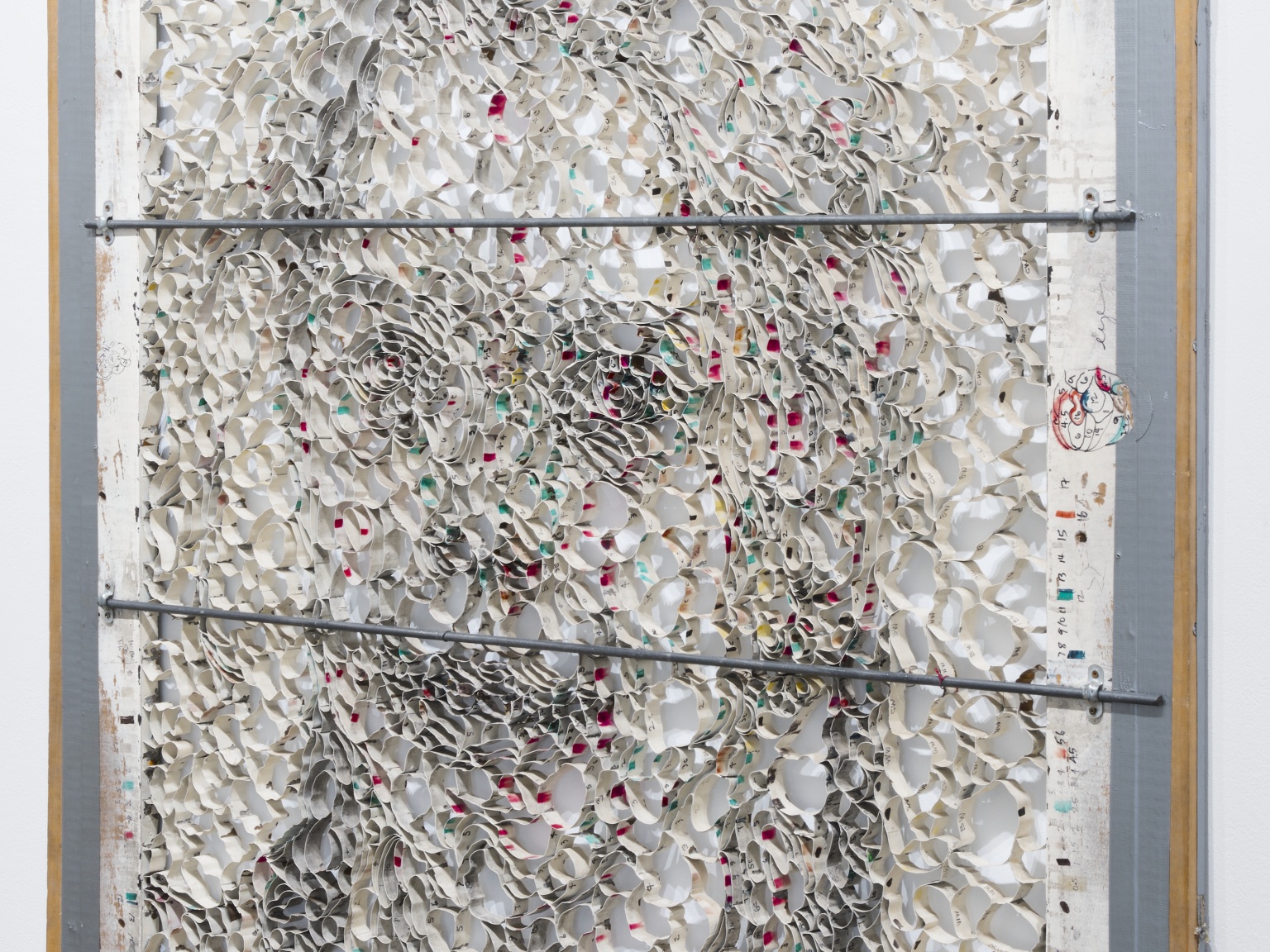
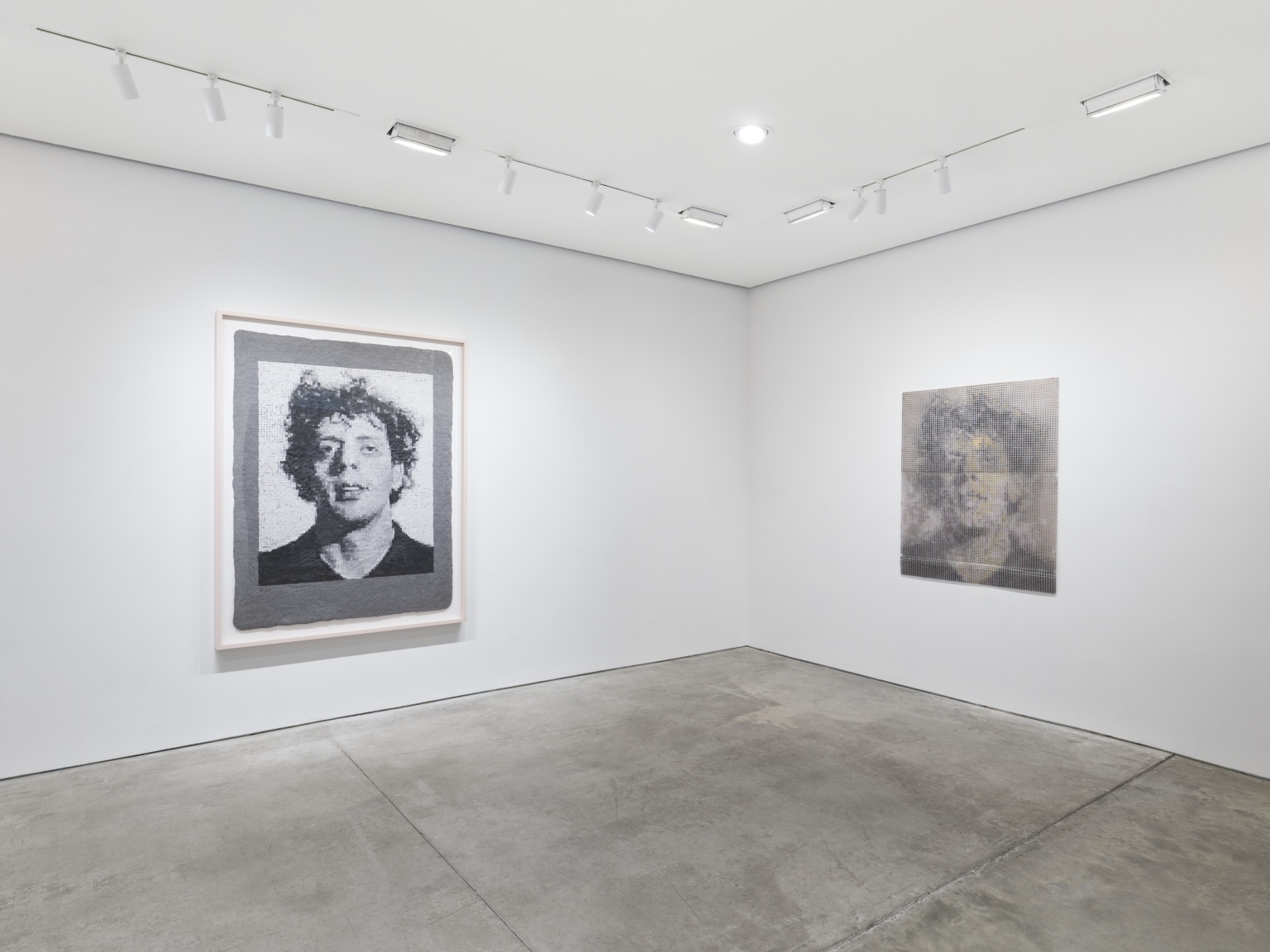
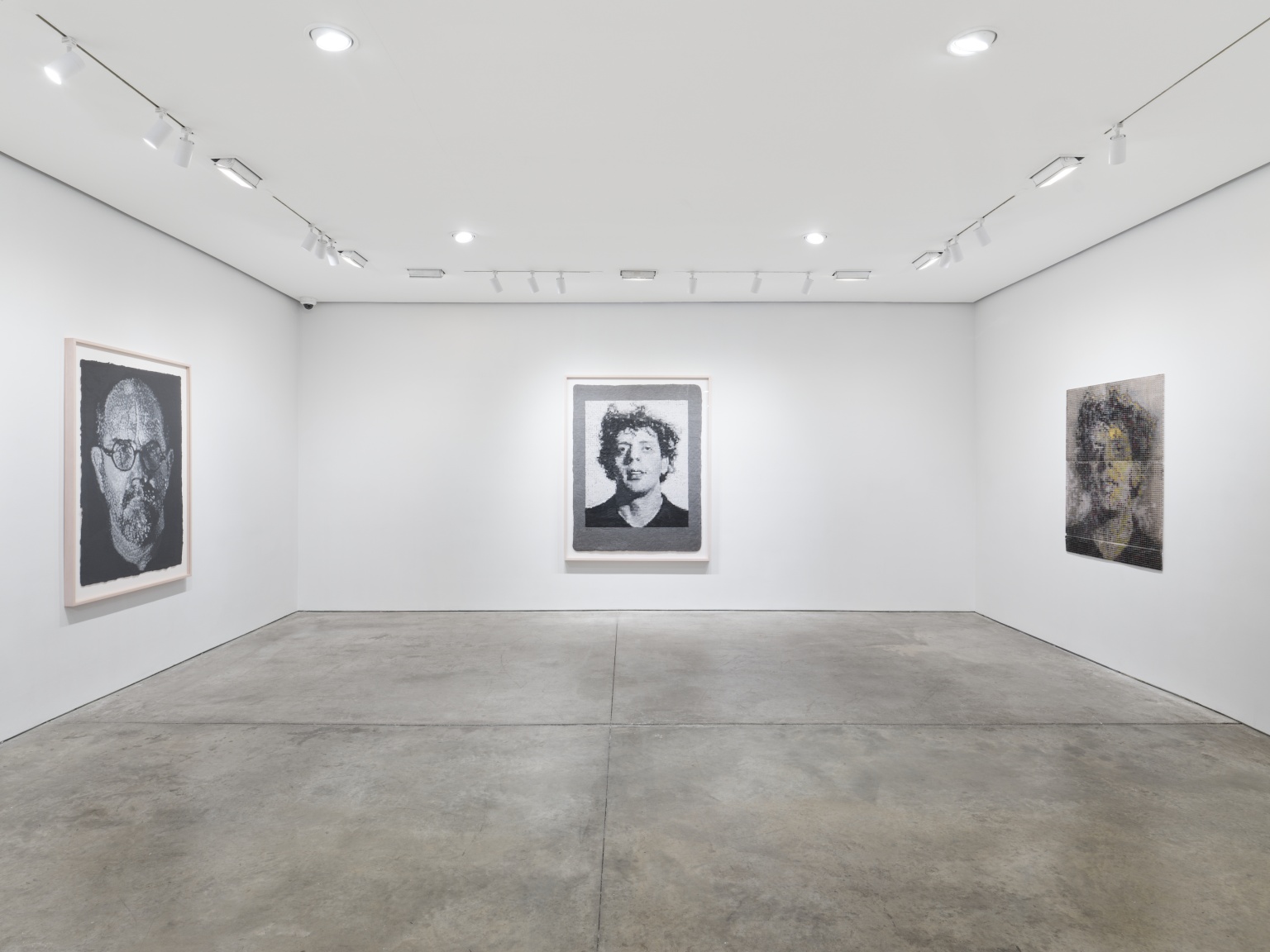
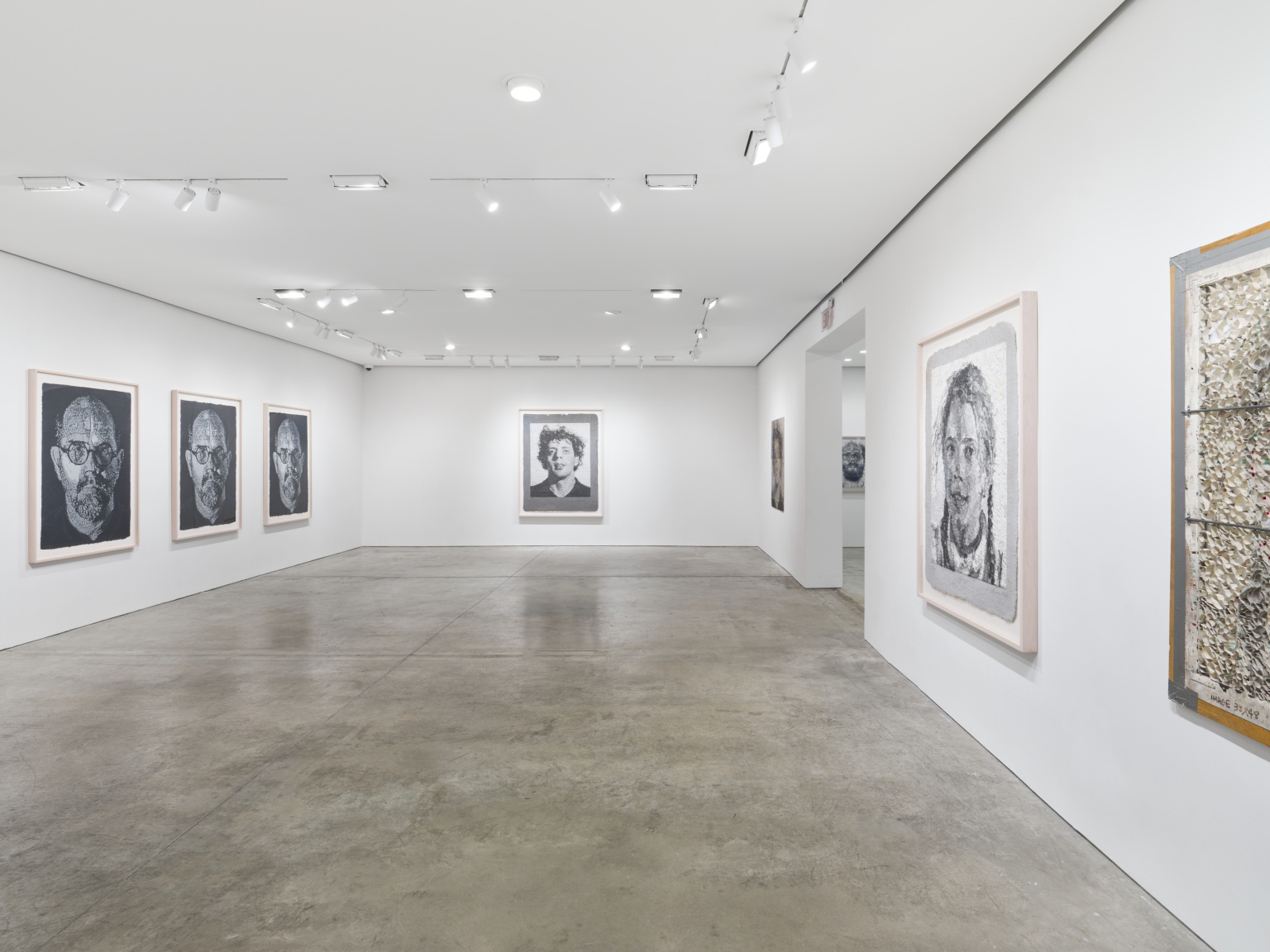
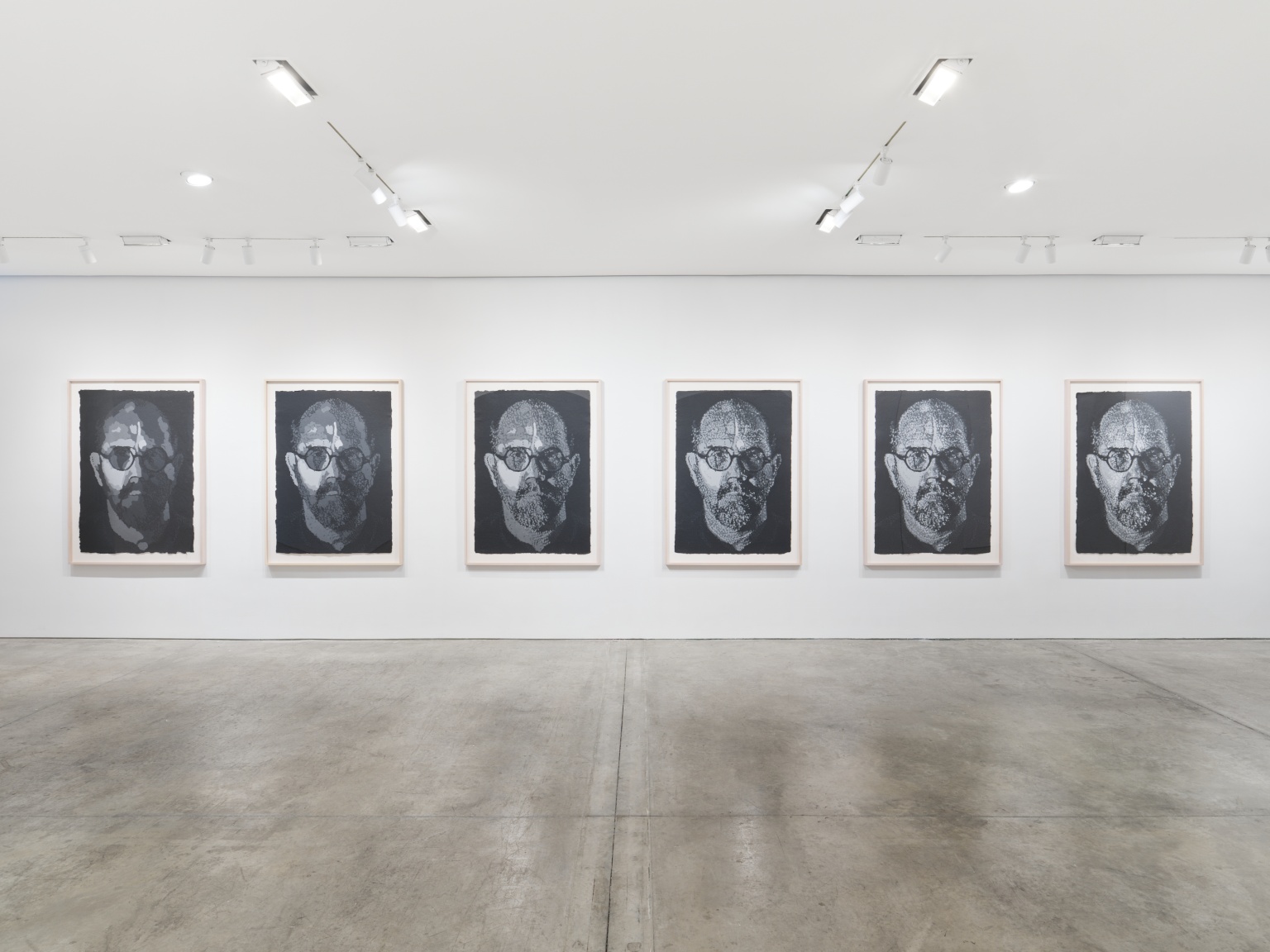
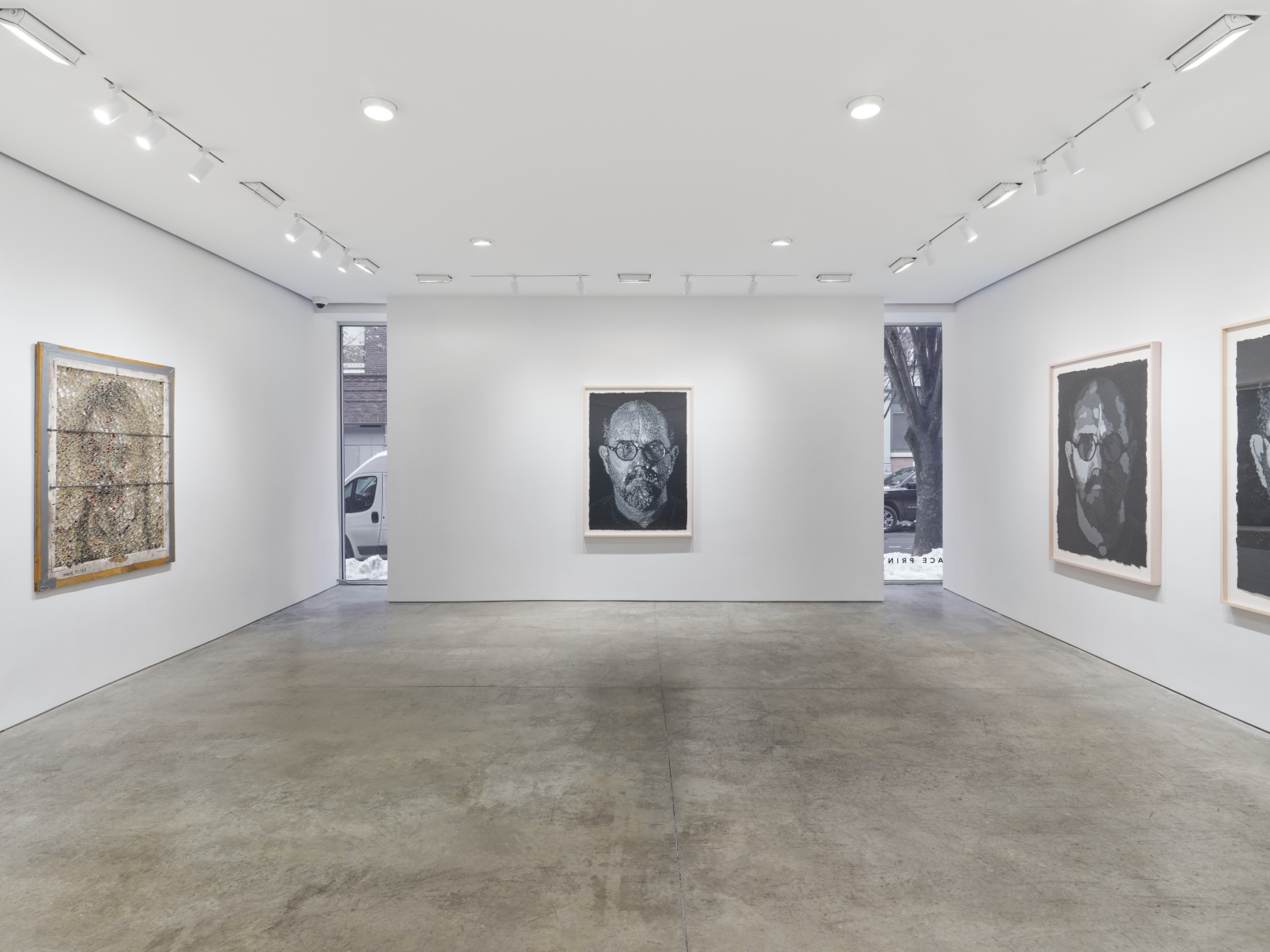
Pace Prints is pleased to announce Chuck Close and Pulp a process-intensive and expository exhibition that compiles a selection of important paper-pulp works by the artist and presents them alongside the matrices and studio tools used in their creation. The exhibition is presented in collaboration with the Chuck Close Estate and will be on view from February 12 – March 14, 2026, at 536 West 22nd Street. There will be an opening reception held on Thursday, February 12 from 6–8pm.
Chuck Close’s formal engagement with printmaking began in the early 1960’s during his time in graduate school at Yale University, where he completed a double major in Painting and Printmaking. Throughout his ensuing decades-long career, Close worked closely with a community of printers to create a vibrant and robust body of prints and editions—refining and experimenting with an expansive set of techniques, including etching, mezzotint, linocut, woodcut, and silk screen, among others.
This show highlights a major expansion of Close's printmaking practice that began in the early 1980’s when Close worked closely with Joe Wilfer, an innovative printer, papermaker, and former publications director at Pace Editions, to produce the artist’s first paper-pulp multiples.
Originally reluctant to work with paper-pulp, Close was eventually convinced by Wilfer of the medium’s potential, and together they would go on to produce 18 paper-pulp editions and a number of unique paper works at The Spring Street Workshop. The earliest publication stemming from their collaboration, Keith (1981), represents the origin point for the innovations in technical control, scale, and aesthetic achievements in paper-pulp the pair would go on to produce.
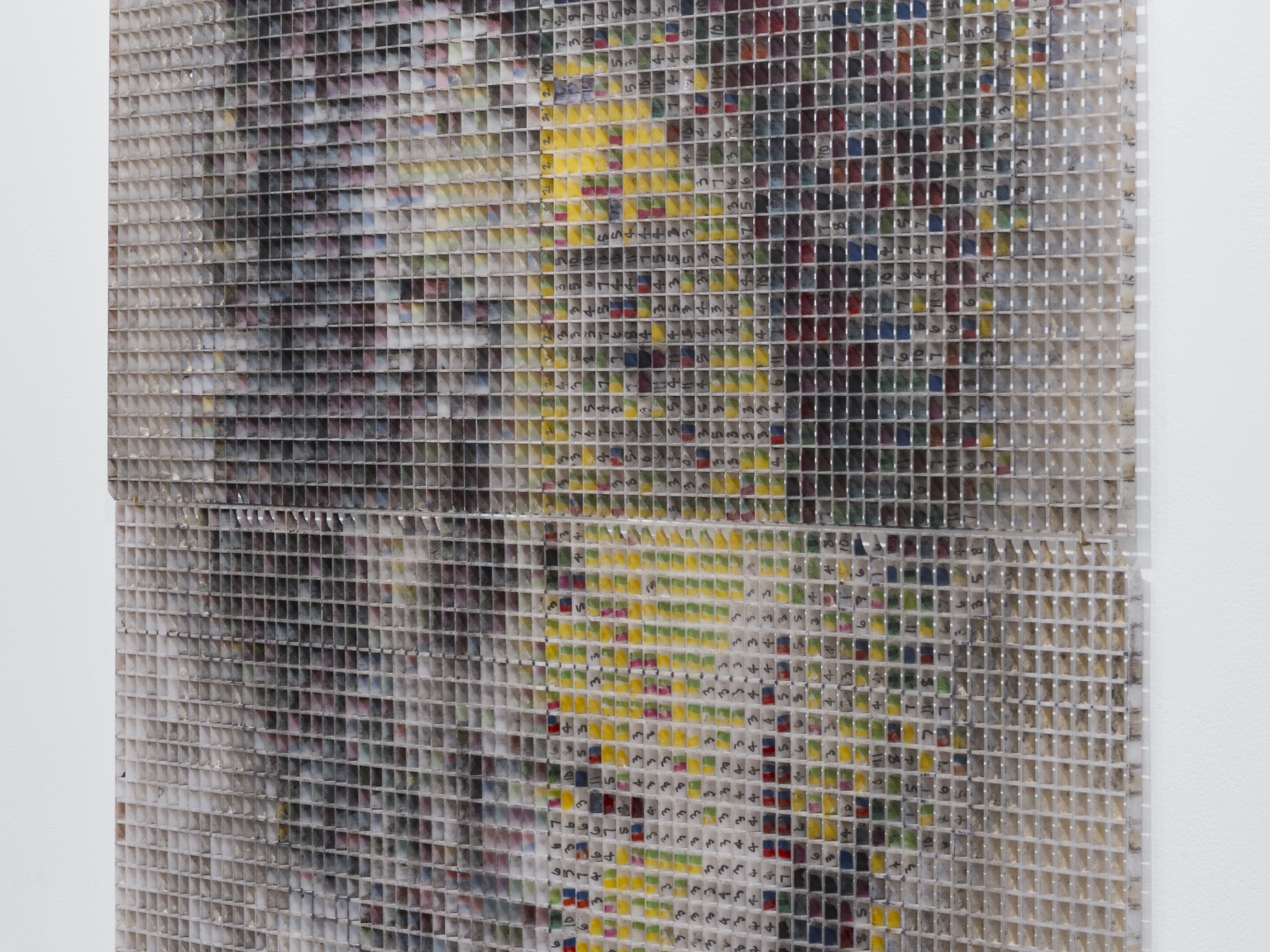
Of the many innovations Wilfer introduced to Close’s papermaking, the usage of large-scale gridded stencils was essential to achieving the artist’s exacting specifications for his work. Several of these grids are included in the exhibition, from early ready-made screens for Robert (1982) and Phil (1982), utilizing commercially available fluorescent light covers, to a later custom-built brass shim apparatus for Georgia (1984). These grids mirror the systems with which Close was able to paint his early photorealistic work, and foreshadow developments in his paintings, which increasingly revealed and relied upon deconstructed gridded compositions throughout his later career.
“Virtually everything that has happened in my unique work, can be traced back to the prints.” - Chuck Close
After Wilfer’s death in 1995, Close returned to paper-pulp in 2001 to create Self Portrait/Pulp (2001). This time working with Ruth Lingen, founding director of Pace Paper, who had been Wilfer’s assistant during the creation of Close’s paper-pulp works from the early 1980’s. Lingen brought her own innovations to Close’s multiples by utilizing mylar sheets to build up overlapping layers of paper-pulp. A progressive proof of Self Portrait/Pulp (2001) is included in the exhibition, showcasing this process.
“Working with Chuck Close on a print project was like creating magic, something he practiced in his youth. Whatever process Chuck used, the prints were carefully considered and well planned, and the finished image always outshone the sometimes difficult execution of them. Chuck’s incredible eye, combined with his willingness to push the limits of scale and technique, made his projects some of the highlights of my working career.” - Ruth Lingen, Founding Director of Pace Paper
Please contact us at info@paceprints.com to inquire or request any additional information.